Weight and metabolic care · Fort Myers

GLP-1 weight loss in Fort Myers.

Losing weight can be difficult, even when you have worked hard at it. At IMLWP, your physician looks at your weight history, appetite and metabolic health to help you decide whether GLP-1 treatment belongs in your care plan.
Illustrative adult patient listening during a medical consultation
Appetite. Nutrition.
Your metabolic health.
Treatment
Medication when it fits your health
Nutrition
Practical meals and appetite support
Follow-up
Your own primary care physician
Cost
Visits included; medicines extra
IMLWP is a concierge (membership) primary care practice in Fort Myers. This service is part of your membership care. Medicare patients sign a private contract with the practice. Membership plans and prices →
Understand your options

How GLP-1 treatment can help

01

Your body already makes GLP-1

GLP-1 is a hormone released by the gut in response to food. It helps communicate that you have eaten, makes insulin function precisely, and influences numerous hormones that affect appetite and gut function, including how quickly food leaves the stomach.
02

Medicines extend that signal

GLP-1 receptor agonists activate the same receptor as your natural hormone. They can reduce hunger and help regulate blood glucose. Tirzepatide acts on both GLP-1 and GIP receptors. The right medicine depends on the condition being treated and your medical history.
03

Care for more than the number on the scale

Excess weight often occurs alongside high blood pressure, abnormal cholesterol and elevated blood sugar. This combination is often called metabolic syndrome. Your physician follows these concerns together, with attention to how you feel as well as your measurements.
04

Eat well as your appetite changes

A smaller appetite can make it harder to get enough protein, fluids and other nutrients. We discuss meals you can manage and adjust the plan as you go. Our free GLP Diet Hack guide to optimizing GLP-1 offers protein-first meal ideas to discuss with your physician.
Understand the biology

How GLP-1 works in the body.

GLP-1 signaling in the bodyA simplified human outline shows signals from the gut to appetite pathways in the brain, the pancreas and the stomach.123
Simplified illustration of selected GLP-1 actions.

After you eat, your gut releases GLP-1. It then acts in three places:

1

Brain & appetite

GLP-1 signaling helps regulate appetite and food intake.

2

Stomach

It can slow the movement of food out of the stomach.

3

Pancreas & glucose

It makes insulin function precisely when glucose rises and reduces glucagon secretion.

Prescription medicines activate these pathways for longer than the body’s natural hormone. Food choices and medication have different effects and roles.
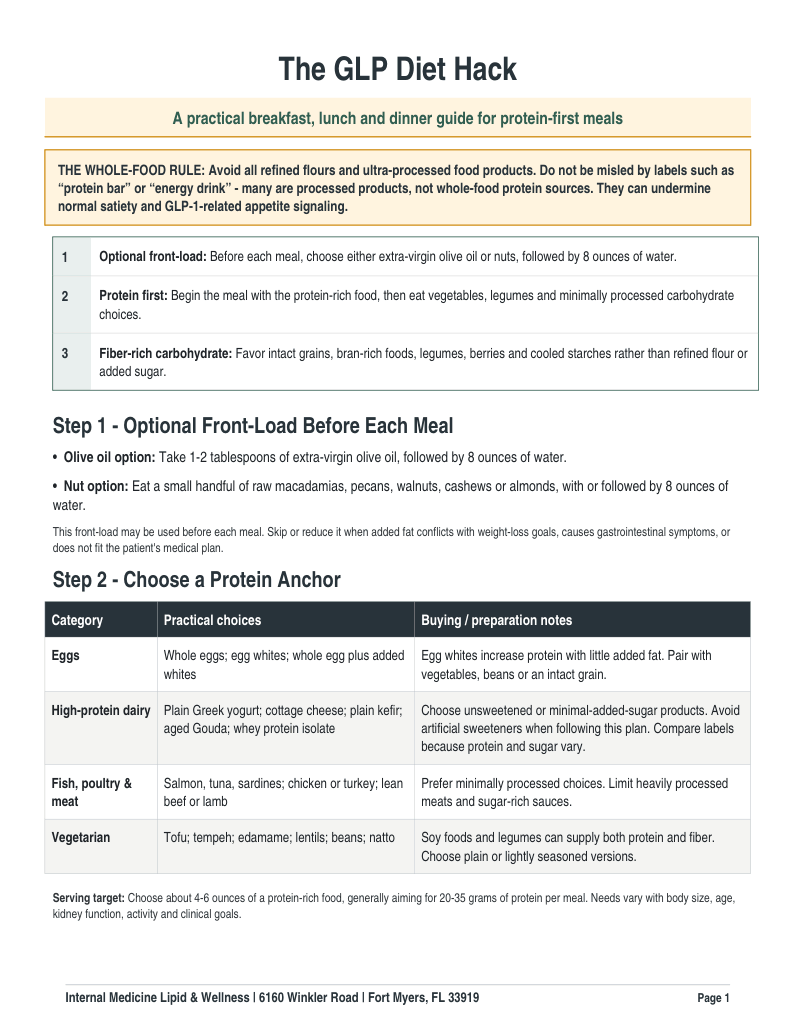
An IMLWP guide to optimizing GLP-1

The GLP Diet Hack

Build protein-first meals for breakfast, lunch and dinner.
Our physicians prepared this guide to protein-first meals and whole-food choices, based on how GLP-1 works in the body. It includes:
  • Breakfast, lunch and dinner examples
  • Protein choices and a simple plate-building formula
  • Fiber-rich foods and label-reading shortcuts

Sign Up
3-page practical guide
An IMLWP guide to optimizing GLP-1

The GLP Diet Hack

Build protein-first meals for breakfast, lunch and dinner.
Our physicians prepared this guide to protein-first meals and whole-food choices, based on how GLP-1 works in the body. It includes:
  • Breakfast, lunch and dinner examples
  • Protein choices and a simple plate-building formula
  • Fiber-rich foods and label-reading shortcuts

Sign Up
Use the meal ideas with your physician’s guidance, especially if you take glucose-lowering medicines or have dietary restrictions.
Your experience at IMLWP

Starting GLP-1 treatment at IMLWP

01

Talk about your history

Review your weight, blood sugar, medicines and what you have already tried.
02

Decide on a treatment plan

Discuss medication, nutrition, activity and prescription costs.
03

Stay in touch as you start

Review your appetite, side effects and response before changing treatment.
04

Follow your progress

Check weight, nutrition, relevant labs and body-composition trends with your physician.

Medication safety

Common side effects include nausea, vomiting, diarrhea or constipation. Tell your physician about pregnancy plans, pancreatitis, gallbladder disease, kidney problems, severe stomach-emptying problems, diabetic eye disease and planned surgery or sedation. Some products must not be used with a personal or family history of medullary thyroid carcinoma (a rare thyroid cancer) or MEN2 (a rare inherited condition). Your physician reviews the medicine’s full prescribing information with you.
Your IMLWP physicians

Care from a physician who knows you

Your own board-certified primary care physician manages your care, from deciding what to investigate to reviewing results and adjusting treatment.
Common questions

Your questions, answered

Your physician reviews your weight and glucose history, other medicines, medical conditions and goals before recommending treatment. Different medicines are approved for different conditions, so your physician recommends one only when it fits your health.

Your physician checks your response, appetite, food intake and side effects, and reviews relevant measurements or labs. Dose changes and appointment timing depend on how you are doing.

No. It offers meal ideas and a simple way to choose foods. Food’s effect on your own hormones is not equivalent to prescription treatment. Use the guide as part of the plan you make with your physician.

We prefer FDA-approved medicines. For prescriptions filled through a pharmacy or manufacturer program, you pay that source directly; IMLWP adds no medication markup. Medication costs are separate from membership. Coverage varies by medicine, the condition treated and your insurance plan.

Compounded products are not FDA approved and are not routine substitutes for available approved medicines. Any exception requires a lawful prescription and a clear medical reason.

Take the next step

Book a complimentary Meet & Greet

A free, 30-minute visit with one of our physicians to meet the practice and ask about membership. It is not a medical visit.