
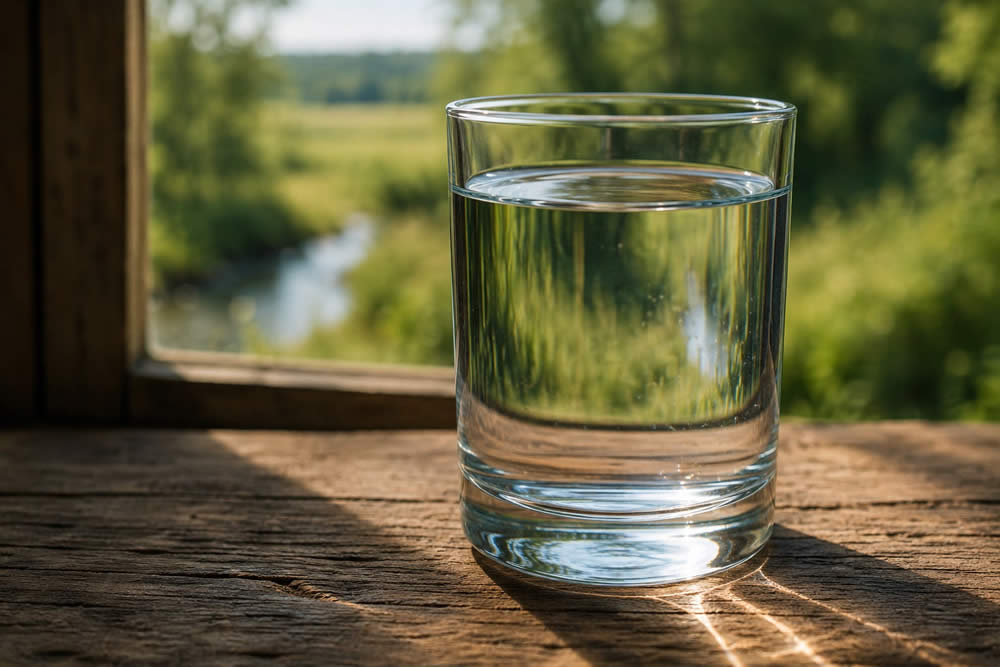
Every July 4th we celebrate the birth of a nation founded on a remarkably simple principle:
Government exists to represent the people—not to govern without their consent.
The grievance that ultimately united the colonies was not merely taxation. It was the absence of representation.
The colonists were expected to live under rules, taxes, and policies created by people thousands of miles away who neither understood nor represented their interests.
Nearly 250 years later, I wonder if we’ve accepted something surprisingly similar in healthcare.

Modern analytical techniques have confirmed what was only suspected a decade ago: microscopic plastic particles are no longer confined to the environment. Researchers have identified them in human blood, placental tissue, arterial plaque, and other organs. Laboratory studies further show that nanoplastics—some no larger than the COVID-19 virus—can enter human cells and alter cellular function.
Whether these particles ultimately contribute to disease remains an active area of investigation, but the question has shifted. Scientists are no longer asking whether these particles enter the body. They are asking what happens after they do. From the linked arterial plaque article, we have demonstrated microplastics build up inside carotid arteries. Also lab studies of tissues demonstrate immune cells and endothelial cells interacting and taking in microplastics.
The irony is that for most of human history, people devoted their ingenuity not to selling water but to protecting it. Every civilization confronted the same challenge. How does one collect clean water, preserve its quality, transport it safely, and keep it cool enough to drink with satisfaction after a day’s labor? Their solutions were surprisingly elegant, and many remain instructive today.
I decided to review the simple question: what is actually the best portable container for drinking water?
Glass remains the most chemically inert material available, but its weight and fragility make it less practical for everyday work outdoors. Plastics have earned their place through convenience and low cost, yet they are ultimately a compromise, chosen more for manufacturing efficiency than because they represent the ideal environment for storing water. Plastics are inferior to glass and stainless steel for water storage and transport. Plastics break down, get nicked, cracked and develop rough surfaces for chemical and microbial mischief.
Next is stainless steel. This is your next best option. From the perspective of modern materials science, high-quality stainless steel—specifically food-grade 304 or 316 stainless steel—has become the benchmark. Stainless steel is remarkably stable because its surface is protected by an invisible chromium oxide layer only a few nanometers thick. Water rarely contacts the underlying metal itself. Under ordinary conditions, only minute quantities of metal ions migrate into the water, amounts measured in parts per billion and well below levels considered significant for human health. The alloys in stainless steel actually create virtuous chemistry to minimize chemical reactions or microbial success. Acids added to water like lemon or tomato can promote elemental metal dissolution/corrosion. The material is durable, easy to sanitize, resistant to corrosion, and, unlike many plastics, it introduces virtually no taste of its own.
Field Note: Modern food-grade stainless steel (304 or 316) protects itself with an invisible chromium oxide layer only a few nanometers thick. Drinking water contacts this passive oxide film rather than bare metal, which explains why corrosion and metal migration are extraordinarily low under normal conditions. Glass remains the most chemically inert storage material available, although stainless steel offers the best combination of durability, sanitation, and portability for everyday use.
Water transport history had already arrived at sound engineering solutions long before the chemistry was understood.
Thousands of years ago, people stored water in fired clay vessels that naturally cooled their contents through gentle evaporation. Oak barrels carried water across continents. Stoneware crocks held household supplies for months. Copper vessels were prized not only for their beauty but because copper naturally suppresses bacterial growth, a phenomenon confirmed centuries later by microbiology. Generation after generation, practical experience selected materials that worked well long before anyone could describe chromium oxide films, electrochemical equilibrium, or bacterial cell membranes.
This is not nostalgia for its own sake. It is an appreciation that some technologies endure because they cooperate with natural processes instead of attempting to replace them.
Perhaps that is the larger lesson.
Our ancestors did not possess stainless steel, polymer chemistry, or modern manufacturing, yet they often made remarkably intelligent choices. Today we have the benefit of both their accumulated experience and modern scientific understanding. Together they point toward a simple conclusion: clean water deserves containers that preserve its quality without unnecessary complexity, unnecessary waste, or unnecessary chemistry.
An interesting historical pattern
One observation emerges across civilizations:
Nomadic cultures favored animal skins because they were portable.
Agricultural societies favored clay because it stayed cool and was locally made.
Seafaring cultures relied on wooden casks for large-volume transport.
Industrial societies adopted metal for durability.
Modern societies shifted to plastic largely because of manufacturing cost and convenience.
This progression reflects changing priorities as much as technological progress.

Perhaps my favorite rediscovery has been the old canvas water bag. As a youngster, I vividly recall my Uncle Bernie and I filling two of these units to hang on the flatbed trailer each morning. The mechanics of the canvas bag actually cools the water within the bag due to evaporative forces drawing and fanning the heat from inside to the outside environment. After lunch we would refill these to keep us hydrated through the afternoon work. I was always amazed at how despite the 100 degree temps, that water was as cool as the ground we drew it up from.
Anyone who grew up around farms, ranches, or construction sites several decades ago may remember seeing one hanging from a tractor, fence post, or pickup truck. These heavy cotton canvas bags performed what still seems like a small miracle. Water slowly migrated through the fibers, wetting the outer surface. As that thin layer evaporated into the surrounding air, it carried away heat, leaving the water inside noticeably cooler than the ambient temperature. The hotter, drier, and breezier the day, the better they worked. No electricity. No compressor. No refrigerant. Simply the quiet physics of evaporation.
Field Note:
The cooling produced by a canvas water bag is not insulation but evaporation. A thin film of water slowly migrates through the cotton fibers. As that water evaporates, it absorbs heat from the remaining water inside the bag. This process becomes increasingly effective as temperature rises, humidity falls, and air movement increases. Long before mechanical refrigeration, farmers and ranchers relied upon this simple principle throughout the American West.
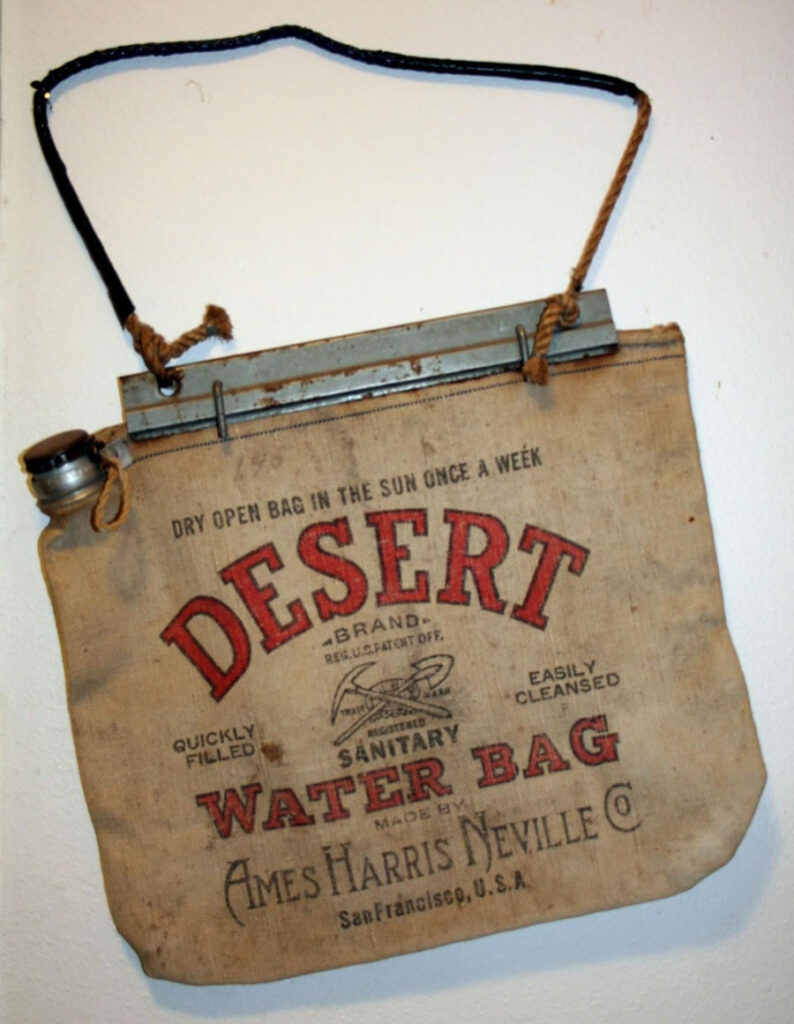
The beauty of the design lies in its restraint. The bag does not force nature to cool the water; it simply creates the conditions that allow nature to do what it has always done. In an age of increasingly complex technology, there is something deeply satisfying about a solution that relies only upon cotton, water, sunlight, moving air, and the laws of thermodynamics.
The canvas bag eventually disappeared, not because it failed, but because our priorities changed. As an aside, I have managed to find an unused and excellent condition canvas water bag to put on our farm UTV. We are always running out of water in the field due to small volume glass and metal units. This bad boy should hold nearly a gallon of water.
Refrigeration became commonplace. Plastic became inexpensive. Convenience became the dominant virtue. We gradually exchanged a reusable object that could serve for years for millions of disposable bottles intended to be used only once. The environmental cost of that exchange has become increasingly difficult to ignore. We are learning the plastic bottle for drinking may have health consequences as well.
At our Five Creeks Farm, we have decided to bring one of these old ideas back into daily use. We are fortunate to draw our drinking water from our own well, where rainfall has spent years filtering naturally through layers of soil, sand, and rock before reaching the aquifer below. That slow passage through the earth remains one of nature’s most effective purification systems. Rather than purchasing bottled water for days spent working the fields, I have arranged for a traditional canvas water bag to become part of our routine. It will hang nearby as we carry out regenerative farming, quietly cooling our well water by evaporation while providing a reusable alternative to disposable plastics. We use metal troughs for the cattle to drink our well water.
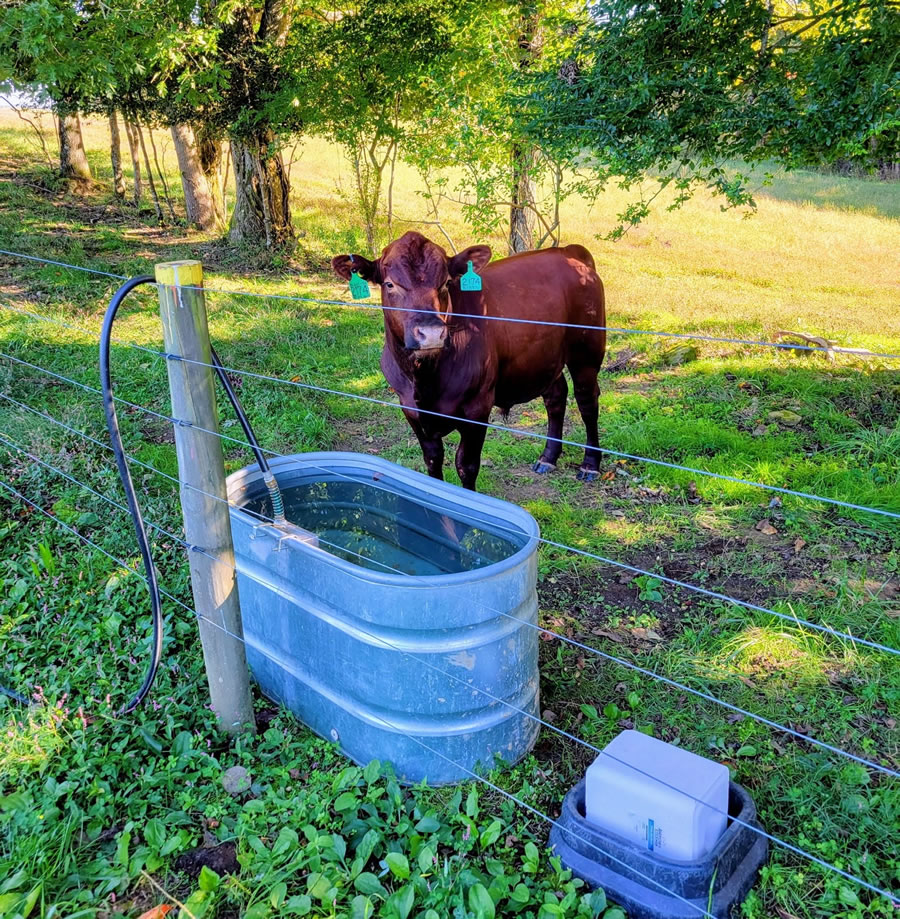
Yep- that is a garden hose tapping into the underwater line. We will have to give that some further consideration.
Water itself has never been the commodity. It remains one of the most abundant and essential gifts entrusted to us. The commodity we have been sold is convenience in the form of three-seven dollar plastic vessels. There is nothing inherently wrong with convenience, but it is worth asking, from time to time, whether convenience has quietly displaced wisdom.
Sometimes the better path forward is found by looking carefully at what we have left behind.

Disclaimer: This information is for educational purposes only and is not intended to replace professional medical advice, diagnosis, or treatment. Always seek the advice of your physician or other qualified health provider with any questions you may have regarding a medical condition.

Southwest Florida’s premier Medical Home. Dedicated to prevention, access, and the patient relationship. Serving Fort Myers, Sanibel, Cape Coral, Bonita Springs, Naples, Punta Gorda & surrounding Southwest Florida areas.
Contact
6160 Winkler Road
Fort Myers, FL 33919
(239) 362-3005
Fax: (239) 362-3392
staff@imlwp.com